

How Sawdust Briquette Charcoal Is Made: A Simple Guide
Table of Contents
- 1. Sawdust Preparation
- 2. Carbonization Process
- 3. Grinding and Mixing
- 4. Briquette Pressing
- 5. Drying and Quality Control
- 6. Key Benefits
Sawdust Briquette Charcoal is a processed solid fuel made by converting suitable wood sawdust into charcoal and then compressing it into convenient briquette shapes. The production process combines controlled carbonization, grinding, mixing, pressing, and drying to create a consistent fuel product.
Understanding how Sawdust Briquette Charcoal is produced helps buyers evaluate quality, production standards, and suitability for household, restaurant, barbecue, and industrial applications.
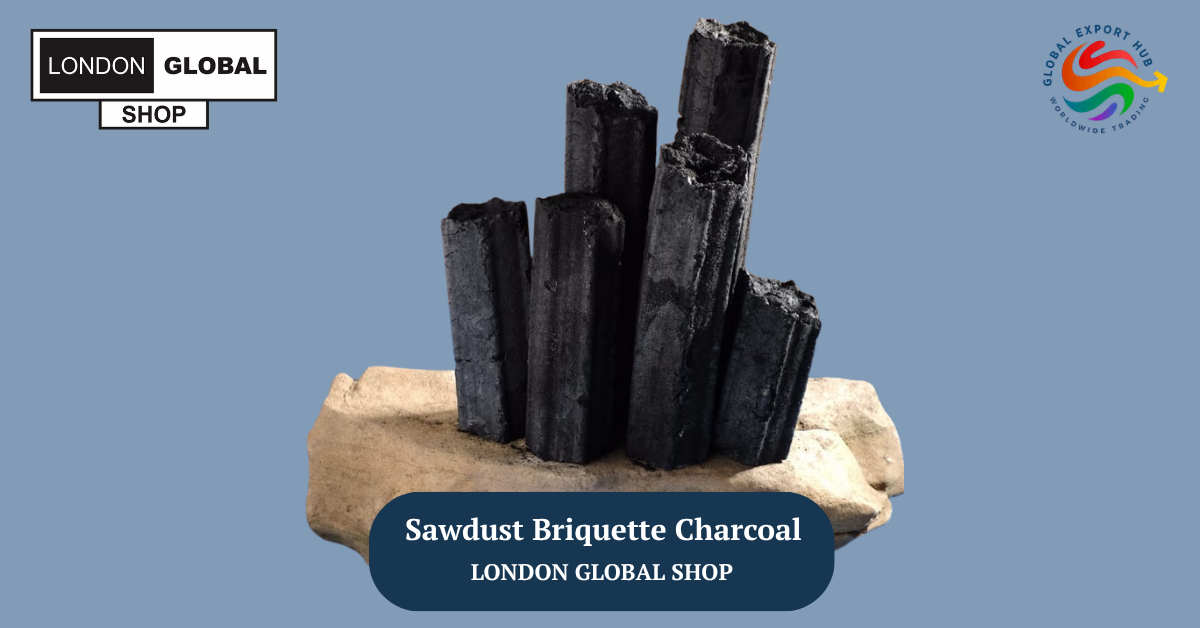
1. Sawdust Briquette Charcoal: Sawdust Preparation
The first step is selecting and preparing clean sawdust. Manufacturers generally remove unwanted materials such as stones, plastic, metal, bark, or other contaminants that could affect the final briquette.
The sawdust is then screened and adjusted to achieve a suitable particle size. Consistent raw material helps improve mixing, compression, burning behavior, and the overall appearance of the finished briquettes.
2. Carbonization Process
After preparation, the sawdust undergoes carbonization. During this stage, the material is heated under controlled conditions with limited oxygen, causing volatile components to leave while producing charcoal.
Temperature control is important because carbonization influences the characteristics of the charcoal, including fixed carbon, moisture, ash content, and burning performance. Properly carbonized material is then cooled before further processing.
3. Grinding and Mixing
Once cooled, the charcoal is crushed or ground into smaller particles. Fine and relatively uniform charcoal particles make it easier to create dense and stable Sawdust Briquette Charcoal.
A suitable binder may then be mixed with the charcoal powder, depending on the manufacturing method and intended application. Water can also be added to achieve the moisture level required for pressing.
- Charcoal particles should be relatively uniform.
- Moisture should be controlled consistently.
- Binder selection should support briquette stability.
- Mixing should produce an even material throughout.
4. Briquette Pressing
The prepared mixture is placed into a briquette machine and compressed under pressure. This forms the loose charcoal material into recognizable shapes such as cylinders, cubes, hexagonal pieces, or other commercial designs.
Compression affects density and mechanical strength. Well-formed Sawdust Briquette Charcoal should maintain its shape during handling, packaging, transportation, and normal use.
5. Drying and Quality Control
Fresh briquettes normally contain moisture after mixing and pressing, so controlled drying is an essential production stage. Drying reduces excess moisture and helps prepare the product for efficient storage and combustion.
Quality control can include checking moisture, ash, dimensions, density, durability, and combustion characteristics. For export or commercial buyers, consistent specifications are particularly important because they support predictable product performance.
Manufacturers can use different production equipment and process settings, so the final characteristics of Sawdust Briquette Charcoal may vary between suppliers.
6. Key Benefits of Sawdust Briquette Charcoal
Compared with loose charcoal, Sawdust Briquette Charcoal offers a standardized shape that can make handling, storage, and transportation more convenient. Its production also provides a practical way to utilize sawdust generated by woodworking operations.
- Uses processed wood residue as a raw material.
- Provides uniform briquette shapes and sizes.
- Can simplify storage and transportation.
- Suitable for various commercial fuel applications.
- Can provide consistent combustion when properly manufactured.
For additional background on charcoal and related carbon materials, readers can explore this trusted reference source. To learn more about available products and commercial options, visit our website.
Conclusion
The production of Sawdust Briquette Charcoal follows several important stages, beginning with sawdust preparation and carbonization and continuing through grinding, mixing, pressing, drying, and quality control.
For buyers, understanding these steps makes it easier to discuss specifications with suppliers and select briquettes that match their intended application. Consistent raw materials, controlled processing, and proper quality checks are key factors in producing dependable charcoal briquettes.
Direvisi oleh Muse Spark (asisten AI)
